What a Grinding Noise When Braking Actually Means
A grinding noise when you apply the brakes is one of the most common reasons drivers in Jamesburg bring their vehicles into GC Automotive & Performance — and one of the most misunderstood. Some people assume it means an expensive repair. Others hope it goes away on its own. Neither response serves you well. Here's exactly what that sound means, the five most likely causes, and what each one will cost to fix.
1. Worn-Through Brake Pads (Most Common)
Brake pads are designed with a built-in wear indicator — a small metal tab that contacts the rotor and squeals when the pad reaches minimum thickness. That squeal is the warning. The grinding you're hearing now means the pad has worn completely through the friction material, and bare metal (the backing plate of the pad) is now grinding directly against the rotor with every stop.
This is the most common cause of brake grinding, and it escalates quickly. Every mile you drive in this condition is scoring grooves into your rotor. A rotor that gets too thin can't be resurfaced — it has to be replaced. What would have been a ~$150 pad replacement can become a $350–$500 pad-and-rotor job within a week of driving on metal-to-metal contact.
Cost range: Pads only (if caught early): $120–$180 per axle. Pads + rotors: $280–$500 per axle depending on vehicle and parts. Come in now — every day matters with this symptom.
2. A Pebble or Debris Caught in the Caliper
Sometimes what sounds like serious metal-on-metal grinding is a small stone or piece of road debris that's lodged between the brake pad and rotor. This can happen to any vehicle, especially after driving on gravel roads or through construction zones.
The good news: this is usually the cheapest brake noise to fix — often just a matter of removing the wheel, cleaning out the debris, and reinstalling. The sound will typically be consistent (grinding on every wheel rotation, not just when braking) and may go away and reappear intermittently as the debris shifts.
Cost range: Often $0–$50 for the inspection and cleaning. The challenge is that it sounds identical to worn pads until we get in there and look — so don't assume it's "just a rock" and ignore it.
3. Rust on the Rotor Surface
If your vehicle sits unused for more than a day or two — especially in New Jersey's humid climate — a thin layer of surface rust can form on the rotor face. When you first apply the brakes after the car has been sitting, this rust gets scraped off, which can create a grinding or scraping sound for the first few stops.
This is normal and not a cause for concern if it clears up within a minute of driving. The sound should disappear completely after a few brake applications as the pads clean the rotor surface. If the grinding persists beyond that, it's not surface rust — it's something else on this list.
Cost range: $0 — this is not a defect. If the rust doesn't clear with normal driving, come in for an inspection.
4. A Sticking or Seized Brake Caliper
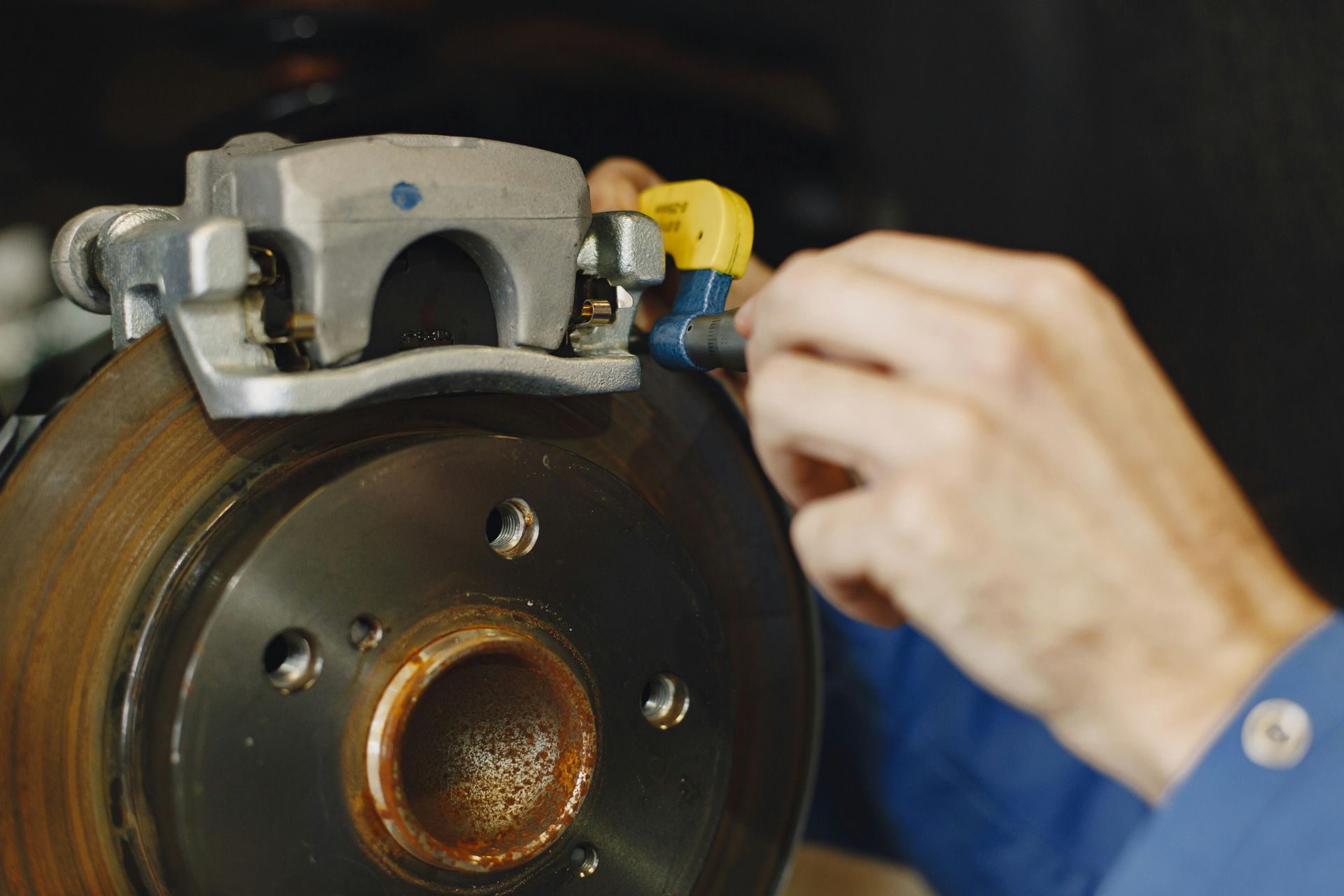
Brake calipers have pistons that press the pads against the rotor when you brake. If a caliper piston seizes in the extended position, the pad stays in constant contact with the rotor — even when you're not braking. This creates continuous friction that sounds like grinding and generates enormous heat.
A seized caliper is identifiable by several symptoms together: grinding even when not braking, the vehicle pulling strongly to one side, one wheel that's significantly hotter than the others after a drive, or a burning smell. This is a safety issue that requires prompt attention — a caliper that's sticking hard enough can cause enough heat to start a fire or cause brake failure.
Cost range: Caliper replacement: $180–$350 per caliper plus associated pads and potentially rotors. Don't delay on this one.
5. Worn Brake Hardware (Shims, Springs, Anti-Rattle Clips)
Modern brake systems include small hardware components — shims, springs, anti-rattle clips — that cushion the pad against the caliper bracket and dampen vibration. When these wear out or break, pads can move slightly within the bracket and create metal-to-metal contact that sounds like grinding or rattling, especially over bumps or during light braking.
This is less urgent than metal-on-metal pad contact, but still worth addressing. When we do a brake service, we always replace this hardware as part of the job — it's inexpensive and prevents comebacks.
Cost range: Hardware is typically included in a full brake service at no additional charge. If hardware alone is the issue, it's a minor repair.
When to Come In
The honest answer: any grinding when braking should be inspected immediately, because you can't diagnose the cause by sound alone. At GC Automotive & Performance, we'll pull the wheels, inspect all components, and tell you exactly what's causing it — and what it will cost to fix — before we touch anything. No surprises, no pressure.
Call us at 732-605-1222 or book an appointment online. We're at 2 John St, Jamesburg, NJ.